
Canada: Passenger from Pakistan Fined $1,400 After Prohibited Meat and Milk Powder Found in Luggage
- International
- (Asia/Kolkata)
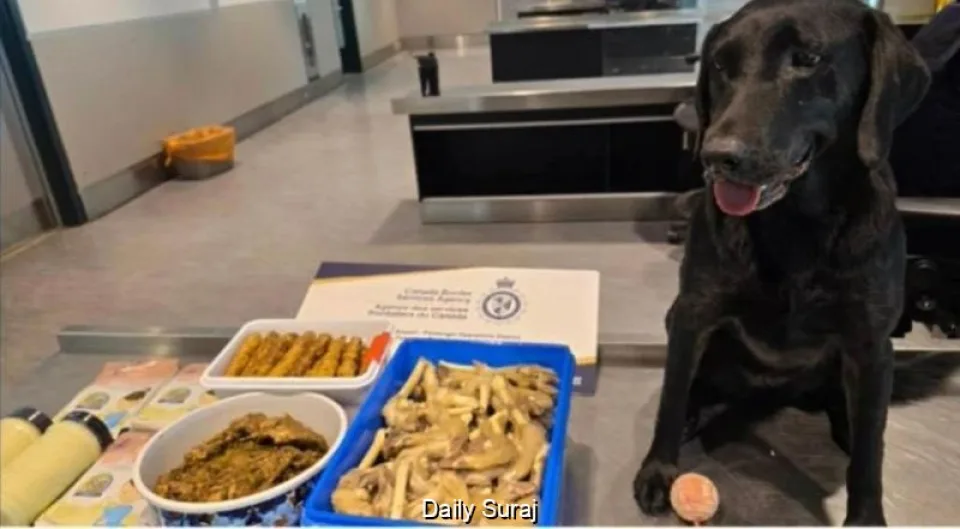
A passenger arriving from Pakistan at Toronto Pearson International Airport in Canada was fined $1,400 after border officials discovered prohibited food products in his luggage. The items included goat trotters, cooked and raw chicken meat, and milk powder.
According to the Canada Border Services Agency (CBSA), the prohibited products were detected during a routine baggage inspection with the assistance of a specially trained sniffer dog named Aggie.
An officer said Aggie detected the smell of restricted items in the passenger's luggage. Following the alert, officials opened and inspected his suitcase, where they recovered a substantial quantity of food products containing goat meat, along with cooked and raw chicken and milk powder.
The passenger had also failed to declare these items when entering Canada. Authorities imposed a fine of $1,400 for the violation.
Sniffer Dogs Help Detect Restricted Items
A CBSA official explained that specially trained detection dogs assist border officers by identifying prohibited products carried in passengers' baggage. When a dog detects the scent of restricted items, officers conduct a detailed inspection of the luggage.
The agency maintains strict regulations on bringing food products, plants, seeds and animals into Canada from other countries.
Why Does Canada Restrict Food and Agricultural Products?
Canadian authorities enforce these restrictions to protect the country's agricultural sector, environment and ecosystem.
Officials warn that food products, plants, seeds and animals brought from abroad may carry harmful viruses, pests or diseases. These could potentially spread within Canada and cause damage to the local environment and agricultural resources.
The CBSA therefore advises international travellers to declare food and agricultural products when entering the country and follow applicable import regulations to avoid penalties.





Leave a Reply