
Seed Smuggling Threatens Japan’s Luxury Fruit Market and Global Crop Innovation
- International
- (Asia/Kolkata)
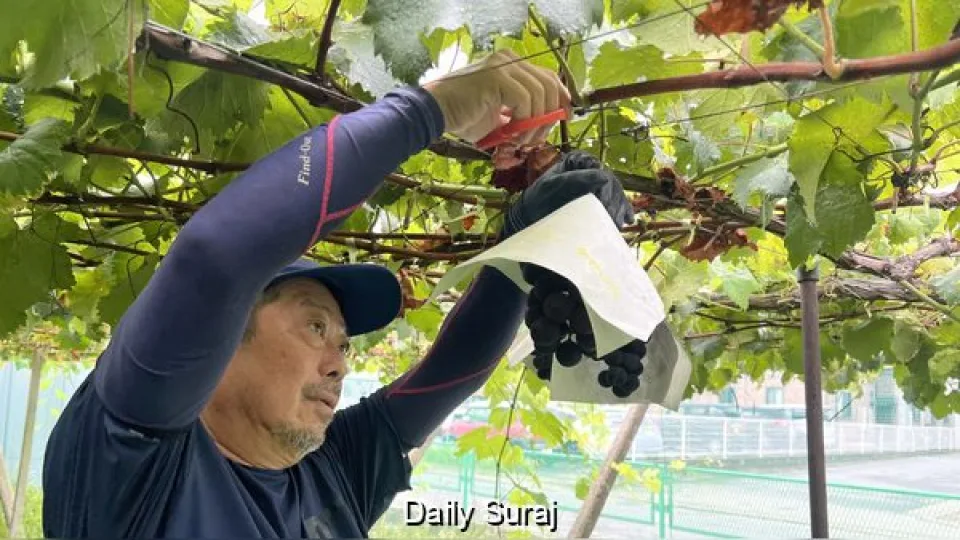
Japan’s world-renowned fruit industry is confronting an escalating challenge as breeders and farmers struggle to protect valuable fruit varieties from unauthorized cultivation overseas, raising concerns about lost revenue, weakened innovation and future food security.
At the center of the latest controversy is the Beni Princess, a premium citrus variety developed in Japan’s Ehime Prefecture. The fruit, known for its sweet flavor, fragrant orange skin and jelly-like texture, took 20 years to develop through the crossbreeding of two elite citrus varieties.
Its launch last year generated excitement among growers eager to benefit from a potentially lucrative new crop. Among them were farmers Ryohei Mori and Kyeong-hui Choi, who removed about 200 trees of another citrus variety from their five-acre family farm to make room for Beni Princess cultivation. The couple also took out a loan to build new facilities needed for production.
“It costs an absolute fortune at first. Buying the saplings, building the greenhouses, and everything,” Mori said.
The growers hope to begin selling their first harvest next spring. However, concerns have emerged that Chinese farmers could reach the market first through the unauthorized cultivation of the variety, according to Japanese media reports.
Choi described the possibility as upsetting but said there appeared to be little farmers could do beyond hoping the Japanese government would intervene.
Concerns Over Intellectual Property Protection
Developing a new fruit variety often requires years of scientific research, testing and significant financial investment. Beyond flavor and appearance, breeders must ensure that a crop can be reliably cultivated on a commercial scale.
Like patents and copyrights, plant varieties can receive legal protection. However, enforcing those rights is often more difficult than protecting conventional intellectual property because seeds, saplings and cuttings can be transported and propagated with relative ease.
The Beni Princess has become the focus of concern after reports surfaced that seedlings were being offered for sale on Chinese e-commerce platforms while its intellectual property protection application remains pending. The claims have not been independently verified, but the reports prompted Ehime Governor to urge the Japanese government to investigate.
Japanese Agriculture Minister Norikazu Suzuki described the matter as “particularly serious.”
Lessons From the Shine Muscat Experience
Japan has encountered similar challenges before. One of the most notable cases involves the Shine Muscat grape, which was introduced in the early 2000s.
The grape variety became highly prized for its floral aroma and juicy texture, but Japan failed to secure intellectual property protection in overseas markets before regulatory deadlines expired. As a result, farms in China and South Korea began producing and selling Shine Muscat grapes in large volumes and at significantly lower prices.
The financial impact has been substantial. According to Suzuki, Japan loses an estimated 20 billion yen (approximately $126.9 million) annually in royalties because of the licensing oversight.
The effects are felt by growers such as Shinya Sato, a grape farmer in Yamanashi Prefecture who cultivates Shine Muscat and several other grape varieties.
“I want people to enjoy eating what I grow, and I want to be fairly compensated for my labor,” Sato said.
“Everyone works hard to build up that value and make something delicious.”
Protecting plant varieties across international borders remains complex. Breeders seeking to safeguard their varieties in foreign markets must typically apply for legal protection in each individual country.
Legal definitions of infringement can also vary from one jurisdiction to another.
According to David Jefferson, an associate professor at the University of Canterbury specializing in environmental and intellectual property law, several Asian countries have strengthened seed protection regulations in recent years.
China has repeatedly updated its seed protection laws, while Japan recently introduced legislation aimed at preventing the illicit export of domestically developed varieties. Many countries are also aligning their legal frameworks more closely with standards promoted by the International Union for the Protection of New Varieties of Plants (UPOV), an organization with 80 member states.
However, UPOV does not enforce intellectual property rights. Breeders must often pursue legal action themselves, which may require costly genetic testing and lengthy investigations.
The risks associated with seed theft have surfaced in several high-profile cases worldwide.
In the United States, an FBI investigation uncovered a long-running scheme involving the theft of genetically modified corn seeds from major agricultural companies. Chinese national Mo Hailong was sentenced in 2016 to 36 months in prison for conspiracy to steal trade secrets from seed companies DuPont Pioneer and Monsanto.
Another widely cited case involved New Zealand-based kiwifruit company Zespri and its highly successful SunGold variety.
The variety had been developed to help combat a disease that had severely affected kiwifruit orchards. However, Chinese national Gao Haoyu, who was licensed to grow the variety in New Zealand, secretly transported plant material to China and sold it to local growers.
The variety was eventually planted on more than 200 hectares in Hubei Province and sold online.
Following years of legal proceedings, a New Zealand court ordered Gao to pay Zespri $8.8 million in damages in 2020. A Chinese court later directed him to remove all SunGold orchards in China and pay nearly $780,000 in additional damages.
Gao has previously told Chinese media that his intentions were to make the variety available to Chinese growers rather than profit from it.
Innovation and Food Security at Stake
Experts warn that the issue extends beyond individual farmers and companies.
Unauthorized propagation can drive down prices, reduce incentives for investment and weaken the value of premium agricultural products. It may also result in lower-quality fruit being sold under well-known names, potentially damaging brand reputations.
According to Minori Hagiwara, who chairs a UPOV subcommittee and works within Japan’s Ministry of Agriculture, Forestry and Fisheries, the widespread cultivation of copied Shine Muscat grapes has significantly reduced returns for Japanese growers.
“It really doesn’t reward the farmers who put in effort,
Industry observers argue that weaker protections can discourage research and development, reducing investment in new crop varieties at a time when climate change is creating additional pressures on global food systems.
As weather extremes increasingly affect staple crops across Asia, the development of resilient, high-yield varieties is becoming more important. Proponents of stronger protections maintain that breeders need confidence they will recover their investments if innovation is to continue.
For growers such as Sato, the threat feels personal.
His family farm now uses protective netting during harvest seasons to discourage theft, a precaution that was not considered necessary when his father managed the operation.
Even so, he acknowledges that physical security can only do so much.
“There’s stealing directly from the field, but there’s also stealing our brand value, taking it and pretending they built it themselves,” Sato said.
As Japan continues to develop premium fruit varieties, farmers, breeders and policymakers face the challenge of balancing innovation, international trade and intellectual property protection in an increasingly interconnected agricultural marketplace.





Leave a Reply