
Tibetan Exile Government Launches Identity Week Amid Concerns Over China’s Assimilation Policies
- National
- (Asia/Kolkata)
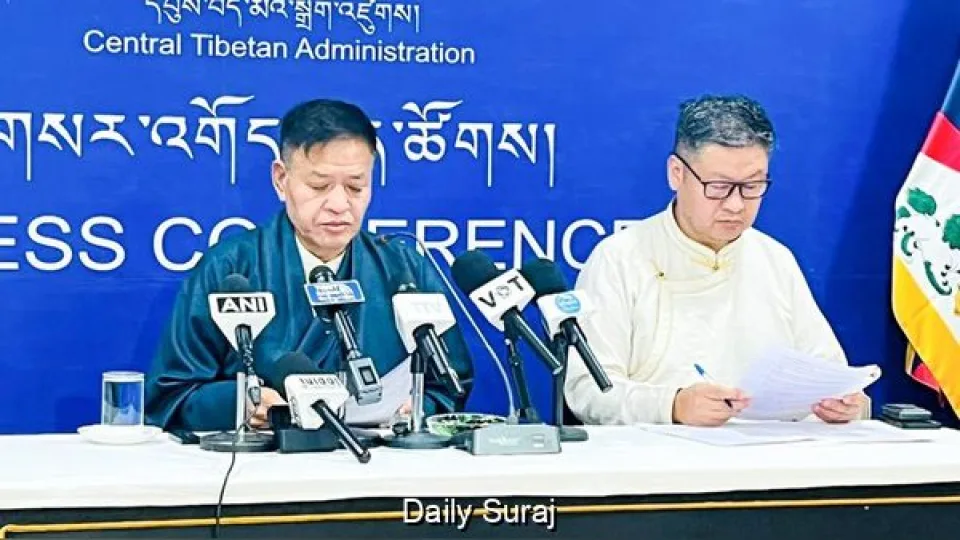
The Central Tibetan Administration (CTA) on Wednesday launched the first Tibetan National Identity Preservation Week, with Sikyong (President) Penpa Tsering calling on Tibetans worldwide to make the preservation of their language, culture and identity a long-term commitment rather than a week-long campaign.
Addressing a press conference in Dharamsala, Tsering said the observance would run from September 23 until next Wednesday. He said the initiative had been launched in response to what the CTA described as increasing efforts by China to assimilate Tibetan identity.
Initiative follows Tibetan Parliament-in-Exile resolution
According to Tsering, the campaign follows a resolution passed by the Tibetan Parliament-in-Exile after China adopted its so-called Ethnic Unity and Progress on March 12, 2026.
The CTA subsequently declared the fourth week of September as Tibetan National Identity Preservation Week.
Tsering said the international community should remain alert to what he described as China’s global ambitions. He alleged that the new law provides a legal framework for policies that have been implemented in Tibet for years and which, according to the CTA, seek to assimilate Tibetan religion, language and culture.
He said Tibetans living inside Tibet continued to preserve their identity despite what he described as “very difficult circumstances” and urged Tibetans around the world to support those efforts.
Focus on language, culture and traditions
The Sikyong said the campaign would seek to counter what he described as China’s “state-sponsored assimilation, propaganda and re-education campaigns”. He referred to concerns expressed by governments, lawmakers, UN experts and international organisations regarding the Chinese law and thanked international supporters of the Tibetan cause.
As part of the week-long programme, a screening of The Man of Peace is scheduled at a theatre in Dharamsala on Thursday. The Tibetan Institute of Performing Arts (TIPA) will also stage a drama highlighting the impact of the Ethnic Unity and Progress Law.
Tsering said the drama would later be taken to Tibetan settlements and communities.
He stressed that the initiative should go beyond cultural programmes and encourage Tibetans to actively engage with their heritage.
“Wear Tibetan, eat Tibetan, dress Tibetan, speak Tibetan and talk about Tibet,” he said, while emphasising the importance of understanding the meaning behind Tibetan songs, dances and traditions.
Communities given flexibility to organise programmes
Tsering said this year’s programme had deliberately allowed Tibetan settlements and communities around the world to organise activities according to their own initiatives.
The CTA plans to expand the programme in subsequent years, with greater participation from younger Tibetans and increased emphasis on language, culture and religion.
The Sikyong also announced the release of the Principles and Guidelines for the Preservation of the Tibetan Language, recently adopted by the Kashag. The guidelines will be made available in written and audio formats, along with an awareness video.
Appeal to younger Tibetans
Tsering made a particular appeal to younger Tibetans born outside traditional Tibetan settlements, urging them to follow the new guidelines and take responsibility for preserving the Tibetan language and identity.
He said Tibetan National Identity Preservation Week should not be viewed as a temporary annual exercise. Instead, he called for it to become an enduring commitment to preserving Tibetan national identity and upholding the principles of nonviolence and compassion associated with the vision of the Dalai Lama.





Leave a Reply