
Rising Tensions in Middle East as US Blocks Iranian Ports, Tehran Issues Threats
- International
- (Asia/Kolkata)
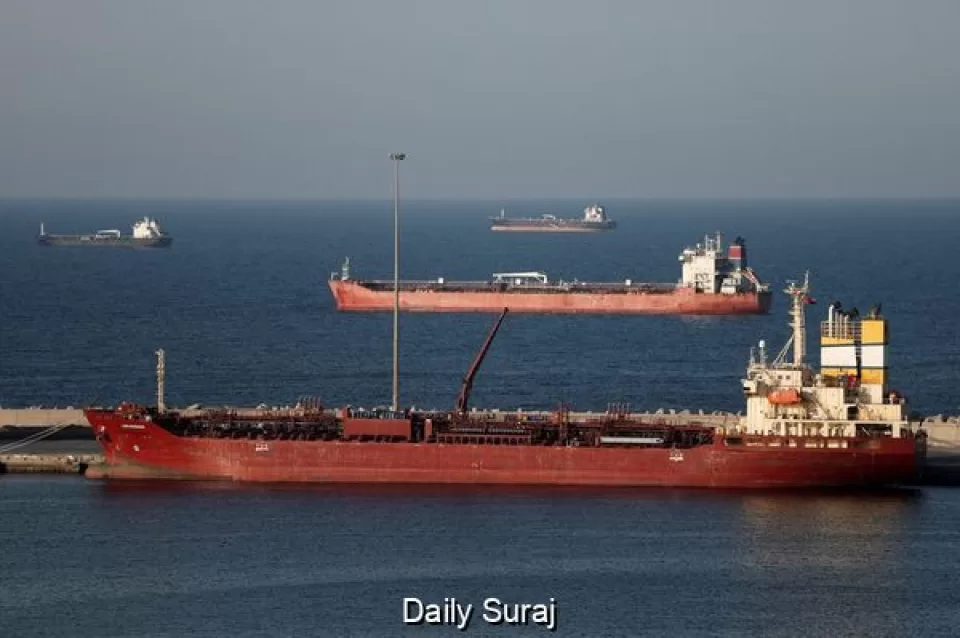
Amid escalating tensions in the Middle East, the United States has enforced a full blockade of Iranian ports, significantly impacting regional stability and global trade. At the same time, US President Donald Trump has संकेतaled the possibility of a second round of negotiations, even as Iran has warned of potential attacks in response to the growing pressure. The United States Central Command (CENTCOM) announced on Wednesday that the blockade of Iranian ports has been successfully implemented. US forces have established maritime dominance across key regional waterways, particularly in the Strait of Hormuz. According to CENTCOM Commander Admiral Brad Cooper, within just 36 hours of initiating the blockade, US forces effectively halted nearly all maritime trade linked to Iran. He stated that the operation has ensured full control over maritime zones in the Middle East, disrupting Iran’s economic lifelines. Estimates suggest that nearly 90 percent of Iran’s economy depends on international trade conducted via sea routes. CENTCOM further stated on social media platform X that advanced US naval destroyers are actively enforcing the blockade. The operation is being conducted in a neutral manner, targeting all vessels heading to or from Iranian ports, regardless of their country of origin. Reports indicate that no vessel attempted to breach the blockade during the first 24 hours. At least six commercial ships complied with US directives and altered their course, returning towards the Gulf of Oman instead of proceeding to Iranian ports. The blockade extends across all Iranian ports along the Persian Gulf and the Gulf of Oman, where strict surveillance is being maintained by US forces. However, CENTCOM clarified that vessels transiting through the Strait of Hormuz to destinations other than Iran will be allowed safe passage. Meanwhile, US Vice President JD Vance stated that the failure of the first round of US-Iran talks in Islamabad was primarily due to deep-rooted mistrust between the two nations. He expressed hope that a second round of negotiations could lead to progress. In a separate development, reports citing the Financial Times claimed that Iran had covertly used a Chinese surveillance satellite to target US military bases across the Middle East during the recent conflict, enhancing its operational capabilities. Additionally, the head of the United Nations’ nuclear watchdog stressed that any agreement aimed at ending the conflict must include strict and detailed verification of Iran’s nuclear activities. Comprehensive confirmation of such activities would be essential before any deal is finalized. Amid concerns over energy security, South Korea has secured 273 million barrels of crude oil from the Middle East and Kazakhstan for supply until the end of the year. Presidential Chief of Staff Kang Hoon-sik stated that these supplies will be routed through alternative pathways, bypassing the Strait of Hormuz. The country has also secured 2.1 million metric tonnes of naphtha following recent diplomatic visits to Kazakhstan, Oman, Saudi Arabia, and Qatar. The current developments highlight intensifying tensions between the United States and Iran, with potential consequences for global trade, energy supply, and regional stability.




Leave a Reply