
Trump Reportedly Expects Renewed Military Action After US Congressional Elections
- International
- (Asia/Kolkata)
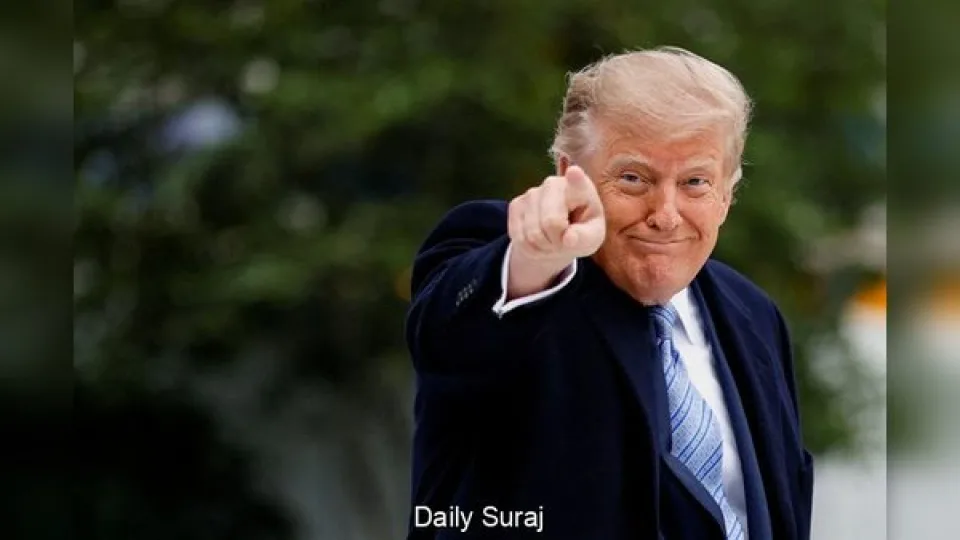
US President Donald Trump has rejected Iran’s proposal aimed at reopening the Strait of Hormuz and halting regional hostilities within seven days, according to a report by The Wall Street Journal, which cited unnamed US officials.
The report said Trump has informed aides that he believes a renewed bombing campaign is likely after the US congressional elections scheduled in November. The development comes amid ongoing diplomatic efforts to reduce tensions in a conflict that has disrupted regional stability and affected one of the world’s most important energy transit routes.
Iranian Foreign Minister Abbas Araqchi told reporters at the United Nations on Friday that Tehran had conveyed a peace proposal to the United States through Qatari mediators. According to Araqchi, the proposed agreement would trigger a seven-day timetable for reopening the Strait of Hormuz and pausing fighting across the region.
“If there is seriousness on the US side to come to a deal and reopen the Strait of Hormuz, everything is now prepared,” Araqchi said.
A US official previously told Reuters that discussions between Washington and Tehran, conducted through mediators, had been “positive and constructive.” However, The Wall Street Journal reported that Trump remained privately doubtful that Iran would meet the conditions set by the United States. The newspaper also reported that Trump has told staff members he considers renewed military strikes a likely outcome.
Reuters said it was unable to independently verify the report.
Proposal Linked to Wider Diplomatic Negotiations
According to Araqchi, acceptance of the proposal could create a pathway toward broader negotiations on mutually agreed issues. Under the plan, Iran would reopen the Strait of Hormuz and hostilities would cease on multiple fronts, including Lebanon.
In return, Tehran expects the United States to lift its blockade on Iranian ports, release frozen Iranian funds and remove sanctions on Iranian oil exports.
The latest initiative follows several unsuccessful diplomatic efforts aimed at ending a conflict that began on February 28 with US and Israeli strikes. Since then, the confrontation has alternated between periods of relative calm and renewed attacks, resulting in thousands of deaths, damage to Iran’s conventional military capabilities and further strain on the country’s economy.
Regional Impact Continues to Grow
The conflict has expanded beyond Iran, drawing in regional actors and affecting security across the Middle East.
Iran and its allies have responded through a series of actions across the region. Iran has launched drone and missile strikes against US allies in the Gulf, while Yemen’s Houthi movement has targeted Saudi interests. Iranian-aligned militias in Iraq have also been blamed for a pipeline attack that temporarily reduced Saudi oil supplies. At the same time, Hezbollah has remained engaged in hostilities with Israeli forces in Lebanon.
The ongoing instability has prompted greater coordination among Saudi Arabia and its partners. On Friday, defence officials from Turkey and Pakistan met in Riyadh to review the regional security situation and discuss intelligence sharing, military cooperation and force integration, according to a statement from Saudi Arabia’s defence ministry.
The meeting followed talks a day earlier among the foreign ministers of Saudi Arabia, Pakistan and Turkey held under the framework of the Mecca Joint Defense Agreement.
Humanitarian Concerns Deepen
The violence has also contributed to a worsening humanitarian situation, particularly in Yemen. The United Nations children’s agency reported on Friday an increase in acute malnutrition among children, highlighting the growing civilian impact of the wider regional conflict.
Diplomatic efforts surrounding the United Nations General Assembly in New York have underscored the international significance of the seven-month-old conflict, which continues to affect global energy markets, regional security and diplomatic relations among major world powers.




Leave a Reply