
Five-Judge Constitution Bench to Hear Pleas Challenging 2023 Election Commissioner Appointment Law: Supreme Court
- National
- (Asia/Kolkata)
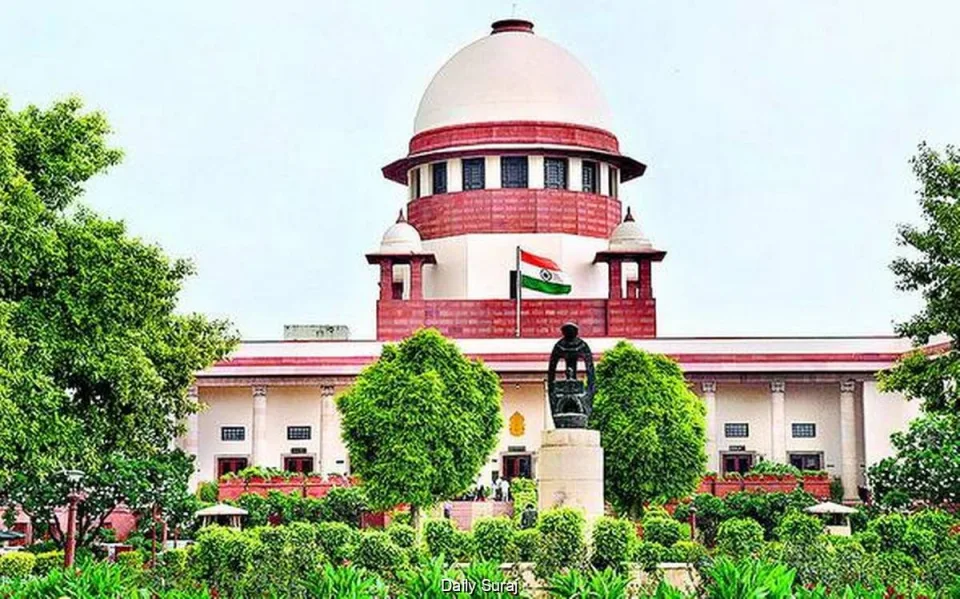
The Supreme Court on Friday declined to hold a separate hearing on an application seeking the recall of a split verdict delivered by a two-judge bench regarding the reference of petitions challenging the 2023 Election Commissioner appointment law to a larger bench. The top court clarified that the already constituted five-judge Constitution bench will examine both the recall application and the substantive petitions questioning the validity of the legislation. Five-Judge Bench Empowered to Hear Recall Plea A three-judge bench comprising Chief Justice Surya Kant, Justice Joymalya Bagchi, and Justice V. Mohana observed that the recall plea, along with any challenge to the order referring the matter to a larger bench, can be adjudicated by the five-judge Constitution bench set up to decide the constitutional validity of the Chief Election Commissioner and Other Election Commissioners (Appointment, Conditions of Service and Term of Office) Act, 2023. The Chief Justice further noted that the five-judge bench remains competent to consider the recall plea even after the retirement of one of the judges who delivered the split verdict. Petitioner Cites Justice Sharma's Upcoming Retirement Appearing for the petitioner, advocate Prashant Bhushan urged the court to list the recall application before the original bench of Justice Dipankar Datta and Justice Satish Chandra Sharma, which had delivered a split verdict on September 23. Pointing out that Justice Sharma is scheduled to retire next week, Bhushan argued that the original bench should hear the plea because Justice Sharma allegedly had a conflict of interest in the matter. Contention Over Alleged Conflict of Interest When the Chief Justice initially remarked that the bench which referred the matter could examine the application, Bhushan countered that the recall plea specifically challenges the referral order itself on grounds of the alleged conflict of interest. However, the Chief Justice maintained that all such objections can be raised directly before the five-judge Constitution bench constituted to give a final ruling on the 2023 Act. Background of the Dispute Over the 2023 Law The controversy stems from the September 23 split verdict by Justices Dipankar Datta and Satish Chandra Sharma, who differed on whether petitions challenging the 2023 law should be heard by a two-judge bench or referred to a five-judge Constitution bench. While Justice Datta held that a two-judge bench could decide the matter, Justice Sharma favoured referring it to a five-judge bench in view of the substantial constitutional questions involved. Core Objection to the Selection Panel Petitions challenging the 2023 legislation primarily object to the exclusion of the Chief Justice of India from the selection committee responsible for appointing the Chief Election Commissioner and Election Commissioners. Under the current statutory framework, the selection panel consists of the Prime Minister, the Leader of the Opposition in the Lok Sabha, and a Union Cabinet Minister nominated by the Prime Minister.





Leave a Reply