
From Folk Singing to Films, Harbhajan Mann’s Journey of Preserving Punjabi Culture
- Punjab
- (Asia/Kolkata)
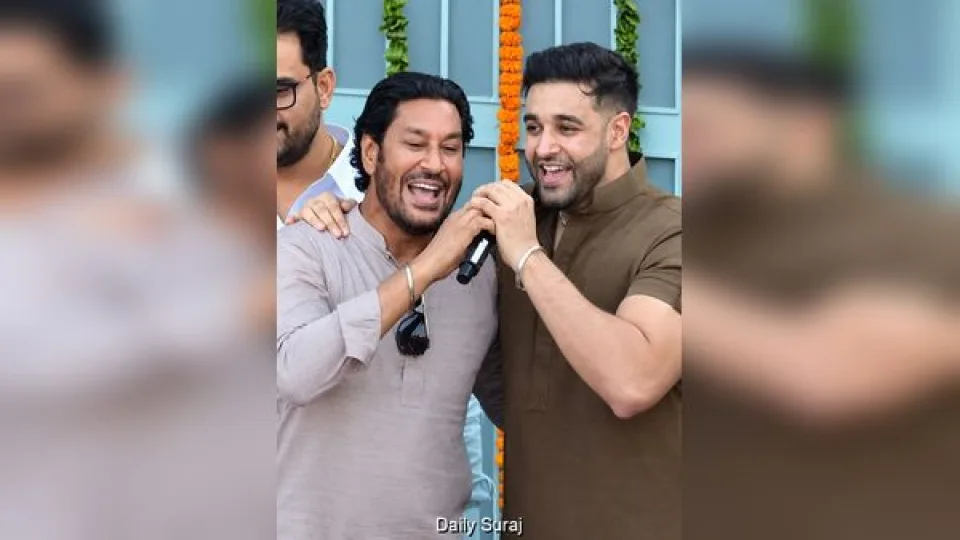
Harbhajan Mann has remained a prominent name in Punjabi music and cinema for nearly four decades. Known for his contributions to kavishri (traditional Punjabi poetic ballad singing), music and acting, he has carried forward the legacy of renowned kavishar Karnail Singh Paras. He regards celebrated lyricist Babu Singh Mann as his mentor. Through his songs and films, Mann has consistently highlighted Punjabi traditions, family relationships, the realities of life and the emotional bond people share with their homeland.
Unlike performers associated with flashy presentations and songs glorifying weapons or drugs, Mann has built his reputation through meaningful, traditional and family-oriented music. His work has earned him a dedicated audience that values Punjabi folk traditions and lyrics with a deeper message.
A Childhood Shaped by Kavishri
Born in Khemuana village in Bathinda district, Harbhajan Mann began his musical journey alongside his brother, Gursewak Mann, during 1976-77. Their father, Harnek Singh Mann, played an important role in introducing them to the art. As children, the brothers watched the performances of the kavishri group led by the celebrated Karnail Singh Paras and began learning the traditional form.
Paras's influence helped shape Harbhajan Mann's singing style and artistic outlook. The brothers started their journey with kavishri compositions such as ‘Hansan Di Jodi’ and ‘Bhagat Singh Di Ghodi’.
Harbhajan, the elder of the two brothers, rose to widespread popularity in the early 1990s with ‘Chithiye Ni Chithiye’, a song that touched listeners through its portrayal of the relationship between a mother and her son. Although the song brought him major recognition in 1992, his first album, ‘Ishq De Mamle’, had been released in 1988. It was based on well-known narrative compositions written by Karnail Singh Paras.
Songs Rooted in Relationships and Life's Realities
Throughout his career, Mann has sung many songs written by Karnail Paras and Babu Singh Mann, popularly known as Babu Singh Mann Mararan Wale. His repertoire reflects family bonds, folk traditions, social observations, life's difficult truths and the experiences of ordinary people. His voice combines the power associated with traditional kavishars with a distinctive sense of pain and emotion.
Mann was only 10 years old when his mother passed away. The loss left a lasting impression on him, which is reflected in songs such as ‘Kithe Gaiyan Maa Sade Hisse Diyan Loriyan’. His compositions about mothers and their affection have resonated deeply with listeners. Following Kuldeep Manak's celebrated song ‘Maa Hundi Hai Maa O Duniya Walio’, Mann's songs on the same theme also earned considerable popularity.
Songs such as ‘Babul Meriyan Gudiyan Tere Ghar Reh Gaiyan’, ‘Rondi Koonj Vichhar Ke Daron’ and ‘Ambi Da Boota’ explore the emotions experienced by parents and daughters when a daughter leaves her parental home after marriage.
Vijay Dhammi's ‘Aa Sohniya Ve Jag Jiundeyan De Mele’ became so popular in Mann's voice that it acquired the appeal of a folk song. Other compositions, including ‘Jag Junction Railan Da’, ‘Maut Di Kali’, ‘Chahun Ku Dinan Da Mela’, ‘Manaan Mar Jaanana, Pichhe Yaadan Reh Jaaniyan’ and ‘Gujjhe Nain’, reflect on life's fleeting nature, birth and death.
Through ‘Main Punjab Bolda Haan’, Mann has also expressed his concern for Punjab. His song ‘Tinn Rang Nahin Labhne’, featuring folk elements, became popular at DJ events, while ‘Sanu Bada Pyara Lagda Hai Tere Walan Vichla Cheer Kude’ used humour to question superstitions.
Mann also established himself in pop music during the 1990s. Songs such as ‘Bhijj Gayi Kurti Lal’, ‘Gallan Goriyan’, ‘Lala Lala Lala’, ‘Lali’ and ‘Hai Meri Billo’ added another dimension to his musical career.
Commitment to Kavishri and Religious Music
The albums released by Harbhajan and Gursewak Mann under the title ‘Satrangi Peengh’ reflected their continuing commitment to kavishri and traditional Punjabi music.
Religious themes have also remained an important part of Harbhajan Mann's work. He sang ‘Loko Apne Bachiyan Nu Sirhind Vikha Ke Liao’, written by Manpreet Tiwana. He also released three religious cassettes: ‘Panth Tere Diyan Goonjan’, ‘Raj Karega Khalsa’ and ‘Amrit Da Baata’.
These works demonstrated that his musical interests extended beyond popular entertainment to religious expression and Punjabi cultural traditions.
‘Jee Aayan Nu’ and a New Chapter for Punjabi Cinema
After establishing himself in kavishri and singing, Mann turned to acting and made a significant contribution to Punjabi cinema. Around two decades ago, when the industry was going through a difficult period, his film ‘Jee Aayan Nu’ helped bring audiences back to Punjabi-language films.
He subsequently appeared in several films, including ‘Asan Nu Maan Watna Da’, ‘Dil Apna Punjabi’, ‘Mitti Wajaan Mardi’, ‘Mera Pind My Home’, ‘Jag Jeondeyan De Mele’, ‘Heer Ranjha’, ‘Yaaran O Dildara’, ‘Haani’, ‘Gaddar: The Traitor’, ‘Sadde CM Saab’ and ‘PR’.
His films have frequently explored Punjabi culture, family relationships, love, village life, migration and the emotional connection people maintain with their homeland. These themes have also appealed to Punjabis living abroad, whose experiences and attachment to their roots have often been reflected on screen.
Punjabi cinema has continued to expand its reach, with an average of one Punjabi film being released every week. Mann's work, particularly ‘Jee Aayan Nu’, is regarded as an important part of the industry's journey towards reconnecting with audiences.
Son Avkash Mann Makes His Film Debut
Harbhajan Mann is now helping his son, Avkash Mann, begin his career in films. Avkash's debut film, ‘Eh Din Roz Ni Aune’, was released on October 9, 2026. Avkash plays the lead role, while Harbhajan Mann appears as a character actor.
In a distinctive move, Mann chose his ancestral village of Khemuana for the film's trailer launch, fulfilling his son's wish. The event took on the atmosphere of a cultural fair, with tents set up for guests and a traditional arrangement of sweets and snacks, including jalebis and pakoras.
The father-son duo also performed the kavishri ‘Jag Junction Railan Da’ at the event. The village holds special significance in the family's cultural history. Karnail Singh Paras once visited the same house with his fellow performers Ranjit Singh Sidhwan, Chand Singh Jandi and Kartar Singh Mandi Kalan.
Harbhajan Mann and his brother Gursewak had also performed kavishri at the religious gathering held after their father Harnek Singh Mann's death. The decision to launch Avkash's film trailer in the ancestral village made the occasion distinctive within the Punjabi film industry and left Harbhajan Mann visibly emotional.
A Legacy Connected to Punjabi Identity
Punjabi culture, family values, love, migration and attachment to one's homeland have remained recurring themes in Harbhajan Mann's music and films. His career has combined popular appeal with a sustained commitment to folk traditions and meaningful storytelling.
From ‘Jee Aayan Nu’ to ‘Eh Din Roz Ni Aune’, his work has reflected the emotions of Punjabi audiences and the bond that Punjabis living overseas maintain with their roots. By supporting his son's entry into cinema, Mann is also helping carry this artistic legacy into a new generation.



Leave a Reply